
New book  Treating Perfectionism · Preorder now + get the free clinician starter kit →
New from PESI Publishing · January 19, 2027

Treating Perfectionism

A Shame-Informed, Integrative Approach to Help Clients Recover from Emotional Avoidance, Self-Sabotage, and Overachievement

Perfectionism isn’t really about high standards. It’s about avoiding shame.

“An impressive range of practical tools . . . thoughtful, well-written, and engaging.”

Steven C. Hayes, PhD, originator of Acceptance and Commitment Therapy
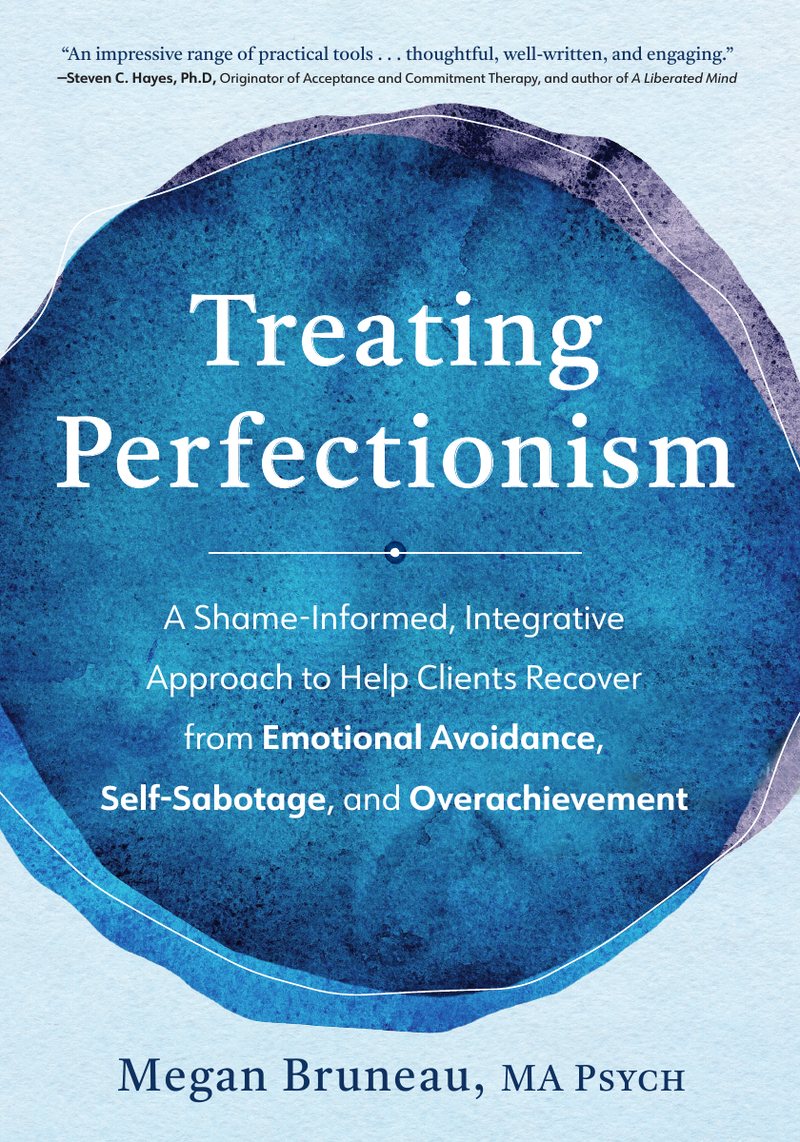
Cover of Treating Perfectionism by Megan Bruneau, MA Psych
The reframe

Perfectionism wears many masks. Underneath, it’s the same wound.

The overachiever who can’t rest. The procrastinator who can’t start. The people-pleaser, the client who numbs out, the one who keeps everyone at arm’s length. Different strategies, same fear: you don’t belong as you are. That’s why our clients symptom-swap, and why treating the behavior alone rarely holds.

LEVEL 1

Core shame

A somatic wound: “I don’t belong as I am.” Lives in the nervous system before it’s ever a thought.

LEVEL 2

Avoided emotions

Disappointment, vulnerability, inadequacy, rejection: feelings fused with shame, so they can’t be felt.

LEVEL 3

Conditional belonging

The rules: “I belong only if I achieve enough, appear perfect, never fail.”

LEVEL 4

Protective behaviors

What we see in the room: overworking, people-pleasing, controlling, numbing, escaping.

Lasting change means working the whole cascade, from safety in the body to the behaviors on the surface. This book shows you how.

A preview from Chapter 4

The goal isn’t lower standards

Perfectionistic clients fear that self-compassion will make them lazy. The Support–Expectations Grid shows them why it won’t: what changes outcomes isn’t how high the bar is, but how they treat themselves on the way to it.

Self-compassion / support →
High support · Low expectations

Stagnance

Permissive inner style

Comfortable but unchallenged. Self-acceptance without growth, where “good enough” turns into settling.

High support · High expectations

Growth Zone

Authoritative inner style

An inner coach. High standards held with compassion, mistakes as learning, healthy risk-taking, sustainable excellence.

Low support · Low expectations

Apathy

Neglectful inner style

Learned helplessness and disconnection. “Why bother trying?”

Low support · High expectations

Paralysis & Fear

Authoritarian inner style

Classic perfectionism. The inner critic in charge, “never good enough,” chronic dysregulation, burnout.

Low expectationsHigh expectations →

The path to healing isn’t lowering standards. It’s adding self-compassion so high expectations become sustainable. The book shows you how to help clients make that move.

Get the free starter kit
What you’ll learn

A framework for treating perfectionism at its root

Blending Internal Family Systems, somatic approaches, attachment theory, ACT, and exposure therapy, this integrative guide will teach you how to:

  • Recognize nontraditional presentations of perfectionism
  • Map the cycle of emotional avoidance that underlies all perfectionist presentations
  • Guide clients to connect with their authentic inner voice and values
  • Build self-compassion, flexible thinking, and shame resilience
  • Support mind-body awareness and nervous system regulation
Inside the book
15worksheets, handouts & clinician tools
6composite clients followed across chapters
10chapters in three parts
336pages · paperback & ebook
Part 1 · Understanding the System
The four-level model, shame and emotional avoidance, attachment origins
Part 2 · Clinical Interventions
Cognitive, mindfulness-based, somatic, and values-based work
Part 3 · Practice and Integration
Graduated exposure, complex presentations and diversity, maintenance
Free for clinicians

Get the Treating Perfectionism Starter Kit

Six tools and diagrams from the book, plus a guide to using them in your first three sessions.

  • How to Use This KitA simple sequence for your first three sessions: understand, assess, intervene
  • The Four-Level SystemThe perfectionist pathway and the healthy alternative, as a one-page diagram
  • The Emotional Contamination ModelWhy clients avoid feelings about their feelings, with the questions that uncover it
  • Brief Emotional Avoidance AssessmentA clinician protocol for mapping avoidance before you design interventions
  • Two Cycles: Shame and GrowthHow self-criticism keeps the loop spinning, and where self-compassion breaks it
  • From Inner Critic to Self-CompassionA client worksheet excerpt for recognizing and transforming the critic’s voice
  • Reporter MindA client worksheet for shifting from judgment to neutral observation

Send me the starter kit

We’ll send a quick confirmation email first, then your download. You’ll also get book news and the occasional note from Megan. Unsubscribe anytime.

Bring this work to your team

Trainings, talks, and team orders

Book Megan to speak or train

CE trainings, workshops, and keynotes on treating perfectionism, shame, and emotional avoidance for group practices, training programs, conferences, and organizations.

Inquire about speaking

Bulk and group orders

Ordering for a group practice, clinical training program, consultation group, or course? Order multiple copies directly through PESI, or call their team at 1-800-844-8260 to ask about bulk orders.

Order through PESI

“For anyone tired of performing to prove they belong.”

About the author

Megan Bruneau, MA Psych

Megan is a therapist, executive coach, writer, speaker, and podcast host with nearly two decades of experience providing therapy and coaching in clinical and organizational settings. Her clinical work integrates Internal Family Systems, attachment theory, somatic approaches, self-compassion, and ACT to help clients transform their relationship with shame and perfectionism.

She’s a regular Forbes contributor, hosts The Failure Factor podcast, and is the author of How to Be Alone (and Together).

Preorder Treating Perfectionism

Paperback · 336 pages · PESI Publishing · January 19, 2027

Contact us

Take the First Step